At your first court date, the judge asks how you plead. Most people know two answers: guilty and not guilty. There is a third, and it is often misunderstood. "No contest" sounds like a middle ground. In the criminal case, it is not. Outside it, it can matter a great deal.
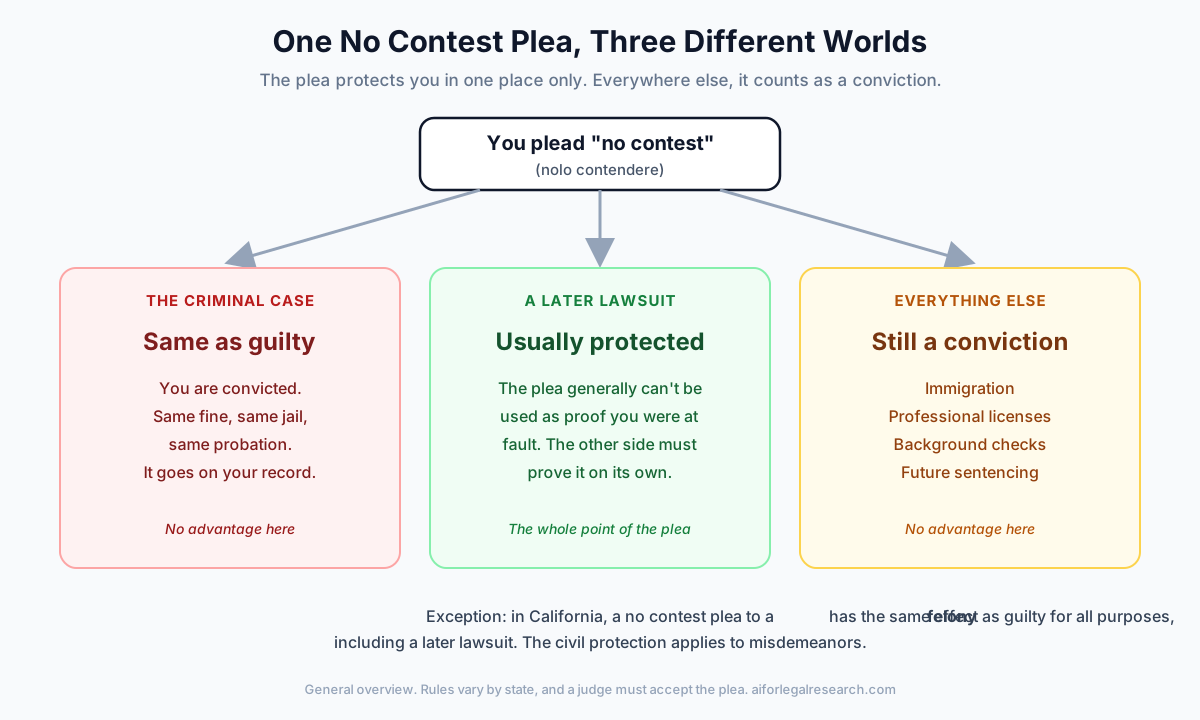
Short answer: Pleading no contest means you accept the conviction and the punishment without admitting you did it. The judge sentences you exactly as if you had pleaded guilty. The main difference is that, in most cases, a no contest plea cannot be used against you in a later civil lawsuit as proof that you were at fault. A guilty plea can.
What No Contest Means
No contest is the plain-English name for nolo contendere, Latin for "I do not wish to contend." You are telling the court: I will not fight this charge, but I am not admitting it either.
The court then finds you guilty based on the plea. You are convicted. The case ends the same way it would after a guilty plea, without a trial.
What Is the Same
More than most people expect. For the criminal case itself, the two pleas produce the same result:
- →A conviction. You leave court convicted either way.
- →The same sentence. Fines, jail, probation, classes, license suspensions. The judge has the same options.
- →A criminal record. The conviction appears on background checks.
- →No trial. You give up the right to a trial, to confront witnesses, and to make the government prove its case.
- →Very limited appeal. After either plea, you generally cannot appeal on the ground that you did not do it.
The One Real Difference: Civil Lawsuits
Many crimes also have a victim who can sue for money. A car crash, a fight, a damaged fence. The criminal case decides punishment. A separate civil case decides who pays for the harm.
If you plead guilty, you have admitted the facts in open court. In the civil case, the other side can show that plea as evidence you were at fault. That can make their case much easier.
A no contest plea generally cannot be used that way. In federal court, Federal Rule of Evidence 410 bars it. Most states have a similar rule. The person suing you has to prove fault with their own evidence, as if the criminal case had never happened.
Example: Maria rear-ends another car. The other driver is hurt, and Maria is charged with a misdemeanor. If she pleads guilty, the injured driver's lawyer can point to that plea in the injury lawsuit. If she pleads no contest, the lawyer cannot. They must prove Maria caused the crash using witnesses, photos, and reports. The criminal penalty is the same either way.
An important exception in California. Under Penal Code 1016, a no contest plea to a felony has the same effect as a guilty plea "for all purposes," which includes a civil lawsuit. The civil protection in California applies to misdemeanors and infractions. Other states draw their own lines, so check the rule where your case is.
Where No Contest Does Not Help
This is where people get hurt. A no contest plea is still a conviction for almost every other purpose.
- →Immigration. Federal immigration law defines a conviction to include a no contest plea. For a non-citizen, it carries the same risk of deportation or a denied green card as a guilty plea.
- →Professional licenses. Nursing boards, bar associations, contractor boards, and others generally treat it as a conviction.
- →Background checks. Employers and landlords see a conviction.
- →Future cases. It counts as a prior if you are charged again, and can increase a later sentence.
- →Gun rights and sex offender registration. Where these follow from a conviction, a no contest plea triggers them too.
Guilty, No Contest, Alford, and Not Guilty Compared
There is also a fourth option some courts allow, the Alford plea, named after the 1970 Supreme Court case North Carolina v. Alford. You plead guilty while stating that you are innocent, usually because the evidence against you is strong and a plea deal is safer than trial.
| Guilty | No contest | Alford plea | Not guilty | |
|---|---|---|---|---|
| Do you admit the crime? | Yes | No | No, you say you are innocent | No |
| Are you convicted? | Yes | Yes | Yes | Only if found guilty at trial |
| Same sentence as guilty? | — | Yes | Yes | Depends on the verdict |
| Usable in a later civil lawsuit? | Yes | Usually no | Often yes, since it is a guilty plea | — |
| Counts for immigration and licenses? | Yes | Yes | Yes | Only if convicted |
| Needs the judge's approval? | Yes | Yes, and it may be refused | Yes, and not every state allows it | No |
Can You Always Plead No Contest?
No. It is not a right. In federal court, and in most states, the judge must agree to accept it, and the prosecutor may object. Judges sometimes refuse in cases with identifiable victims, because victims may want an admission. A few states limit or do not allow the plea at all. Your lawyer will know the local practice.
When No Contest Makes Sense
It is most useful when two things are true: you are going to accept a conviction anyway, and someone might sue you over the same events. Common examples:
- →A traffic offense after a crash that caused injury or property damage
- →A misdemeanor assault or battery where the other person could file a civil claim
- →Vandalism or property damage with a clear dollar loss
- →Any case where your insurer may be drawn into a later dispute
It usually makes no practical difference for offenses with no victim who could sue, such as many drug possession cases or a simple speeding ticket. In those cases, the choice between guilty and no contest mostly comes down to how you want the record to read, and whether the judge will accept it.
Before You Enter Any Plea
A plea is usually final. Taking it back later is difficult and often impossible. Before you decide:
- →Talk to a lawyer. If you cannot afford one and jail is possible, ask the court for a public defender at your first appearance.
- →If you are not a U.S. citizen, ask specifically about immigration consequences before pleading. Immigration law counts a no contest plea as a conviction, so it is not a safe alternative to pleading guilty.
- →If you hold a professional license, check your board's rules on reporting convictions.
- →Ask whether a civil lawsuit is likely. That is the situation where no contest earns its place.
Paste the text for a plain-English explanation of what it says. Legal information, not legal advice.
Frequently Asked Questions
Is no contest the same as guilty?
In the criminal case, yes: you are convicted and sentenced the same way. The difference is that a no contest plea usually cannot be used against you as an admission in a later civil lawsuit, while a guilty plea can.
Does a no contest plea go on your record?
Yes. It results in a conviction, which appears on your criminal record and on background checks, just as a guilty plea would.
Is no contest better than guilty?
Only when someone might sue you over the same events, and even then only where your state's rule protects the plea. For immigration, licenses, and future sentencing, it is treated the same as a guilty plea.
Can a judge refuse a no contest plea?
Yes. Pleading no contest is not an automatic right. The judge decides whether to accept it, and may refuse, especially in cases with victims.
What is the difference between an Alford plea and no contest?
With a no contest plea you do not admit or deny guilt. With an Alford plea you plead guilty while stating you are innocent. Both result in a conviction, but an Alford plea is formally a guilty plea, so it may be usable in a civil lawsuit where a no contest plea would not.
Can I change my plea after pleading no contest?
Sometimes, but it is hard. Courts usually allow it only for good cause, such as not being told about a serious consequence, and the request must normally be made before sentencing. Assume the plea is final when you make it.
This article is general legal information, not legal advice. Plea rules differ between federal court and each state, and the right choice depends on your charges and your circumstances. Speak with a criminal defense attorney or public defender before entering any plea.
Editorial note: AI For Legal Research publishes independent content. We do not accept payment for editorial coverage or review scores. Nothing on this site constitutes legal advice. Always consult a qualified attorney for legal matters.