The summons sat on the counter. Then the date came and went. Now you are wondering if the police are coming.
They almost certainly are not. For most people, missing jury duty once leads to a second letter, not an arrest. But it does not go away on its own either. If you keep ignoring the court, the consequences grow. This article walks through what happens, step by step, and how to stop it.
What Actually Happens, in Order
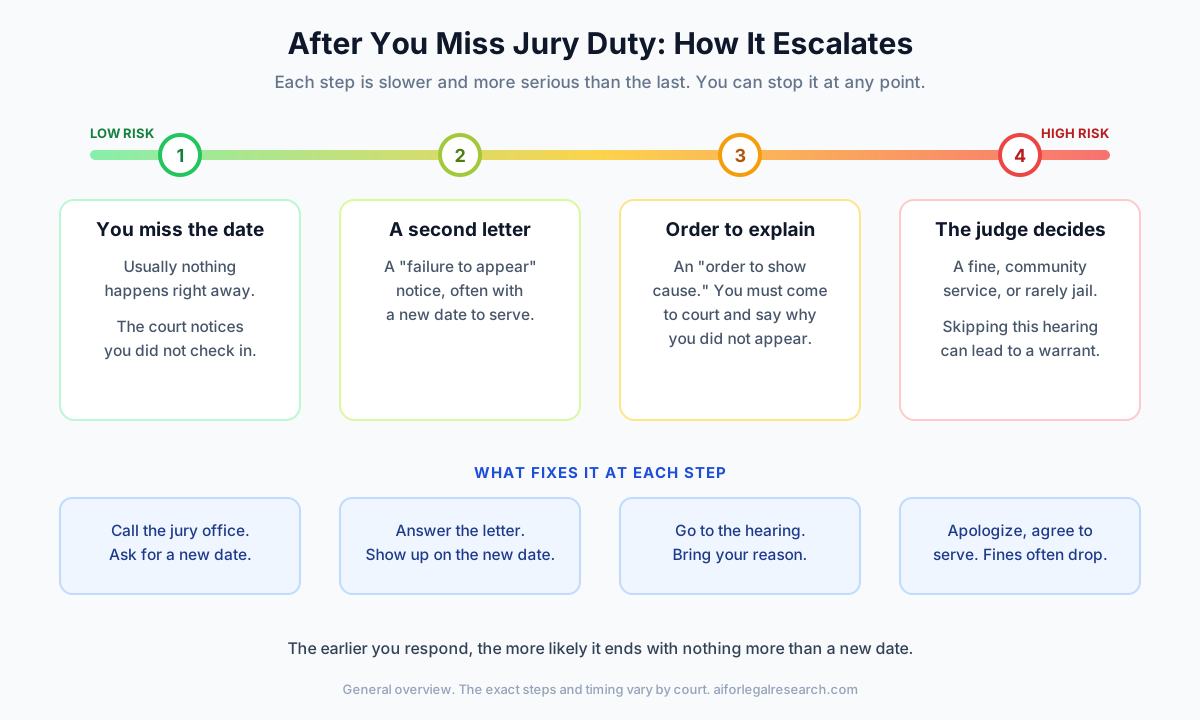
Courts summon far more people than they need. Many never respond. So a single missed date is common, and courts handle it with paperwork before anything else. The usual path looks like this.
1. The date passes
Usually, nothing happens that day. The jury office sees that you did not check in. Some courts do nothing further for a while. Some send a notice within a few weeks.
2. You get a second letter
This is often called a "failure to appear" or "delinquent juror" notice. It tells you that you missed your date. It often gives you a new date, or asks you to contact the court. This is the easiest point to fix things. Answer the letter and serve on the new date, and in most courts that is the end of it.
3. You are ordered to come explain yourself
If you ignore the second letter, the court can issue an order to show cause. This is a court order to appear before a judge and explain why you did not serve. It is no longer a request. It arrives by mail, sometimes certified mail.
4. The judge decides what to do
At the hearing, the judge listens to your reason. If it is reasonable, many judges simply give you a new date. If not, the judge can fine you, order community service, or in rare cases order a short jail stay. What turns this from a paperwork problem into a real legal problem is not showing up to this hearing. A judge can then issue a warrant for your arrest.
How Much Can It Cost?
It depends on where you were summoned. Here are three real examples, taken from the laws themselves.
- →Federal court: a fine of up to $1,000, up to three days in jail, community service, or a mix of these, if you cannot show good cause for missing it (28 U.S.C. § 1866(g)).
- →California state courts: $250 for a first missed summons, $750 for a second, and $1,500 for a third or more. The court must give you notice and a chance to explain first (Code of Civil Procedure § 209). A judge can also use contempt of court instead.
- →Texas state courts: a fine of $100 to $1,000 (Government Code § 62.0141).
Other states fall in a similar range. These are maximums. People who show up, explain, and agree to serve often pay less, or nothing at all.
Can You Really Go to Jail?
It is legally possible. It is rare. Jail for jury duty usually happens to someone who ignored the summons, ignored the second letter, and then ignored a court order to appear. By then the problem is not the missed jury date. It is disobeying a judge.
If you respond at any earlier stage, jail is very unlikely.
What Happens If You Skip Jury Duty on Purpose?
Courts see a difference between someone who forgot and someone who refuses.
If you forgot, lost the letter, or had an emergency, say so. Judges hear this every week. It usually ends with a new date.
If you skipped on purpose and keep skipping, the court is more likely to impose a fine. Telling a judge you simply did not want to go rarely helps. Repeated refusals are also what the escalating fines in states like California are designed for.
If you do not want to serve, there are legal ways to get out of it or delay it. They are covered below, and they work far better than not showing up.
If You Already Missed It, Do This Today
- →Find your summons. It has your juror number and the court's phone number or website.
- →Contact the jury office yourself. Call, email, or use the court's online juror portal. Do not wait for their letter.
- →Be honest and brief. Say you missed your date and want to reschedule. If there was a reason, give it.
- →Ask for a new date, and write it down.
- →Keep a record. Note who you spoke to and when, or save the email. If a letter arrives later, you can show you already fixed it.
Most people who do this hear nothing more except a new date to serve.
Reasons Courts Usually Accept
A good reason does not have to be dramatic. It has to be real. Courts commonly accept:
- →You never received the summons, or it went to an old address
- →A medical problem or emergency, yours or a family member's
- →Caring for a young child or a dependent with no one else to help
- →Travel booked before the summons arrived
- →Serious financial hardship, such as losing wages you cannot afford to lose
"I was busy at work" and "I forgot" are weaker. They usually get you a new date rather than a full excuse. Bring proof if you have it, like a doctor's note or a booking confirmation.
Your Employer Cannot Punish You for Serving
Many people skip jury duty because they are afraid of their boss. The law protects you here.
For federal jury service, an employer may not fire, threaten, intimidate, or coerce a permanent employee because of it. An employer who does can face a civil penalty of up to $5,000 per violation (28 U.S.C. § 1875). Most states have similar rules for state jury duty. In California, for example, an employer cannot fire or discriminate against you for serving, as long as you give reasonable notice before you take the time off (Labor Code § 230).
Whether your employer must pay you while you serve is a different question, and it varies by state and employer. Check your employee handbook or ask HR.
Watch Out for the Jury Duty Scam Call
There is a common scam built on the fear this article is about. Someone calls, emails, or texts. They say you missed jury duty and a warrant has been issued. They say you can avoid arrest if you pay a fine right now, or "confirm" your personal details.
The federal courts say plainly that these messages are fraud. Courts contact jurors mainly by mail. They do not ask for sensitive personal information over the phone or by email, and they do not threaten fines and jail to get it. If you get a call like this, hang up. Then call your court's jury office using the number on its official website, not a number the caller gives you. You can also report it to the Federal Trade Commission.
Better Ways to Get Out of Jury Duty
If the timing is bad, do not ignore the summons. Use one of these instead. The details vary by court, and your summons explains the process.
- →Postpone it. Most courts let you move your date once, often online, with no reason needed.
- →Ask to be excused for hardship. Medical, financial, and caregiving hardships are the common grounds.
- →Check if you are exempt or disqualified. Examples in many places include not being a citizen, not living in the county, or recent jury service. Some states exempt older adults on request.
- →Know how short it may be. Many courts use a "one day or one trial" system. If you are not picked on your first day, you are done.
Paste the text of a summons or court notice for a plain-English explanation. Legal information, not legal advice.
This article is general legal information, not legal advice. Jury rules and penalties differ between federal court and each state, and between counties. For your situation, follow the instructions on your summons or contact the court's jury office.
Editorial note: AI For Legal Research publishes independent content. We do not accept payment for editorial coverage or review scores. Nothing on this site constitutes legal advice. Always consult a qualified attorney for legal matters.