Someone cuts you off. You lean on the horn, they brake hard in front of you, and for a few seconds everyone is furious. Later, one question sticks: was any of that illegal?
The honest answer is that "road rage" is usually not a crime by that name. Most states, including California, have no law called road rage. But nearly everything people do when they are enraged behind the wheel is covered by some other law. The charge can be anything from a traffic ticket to a felony with prison time.
So the better question is not "is road rage a crime?" It is "which part of what happened was a crime?"
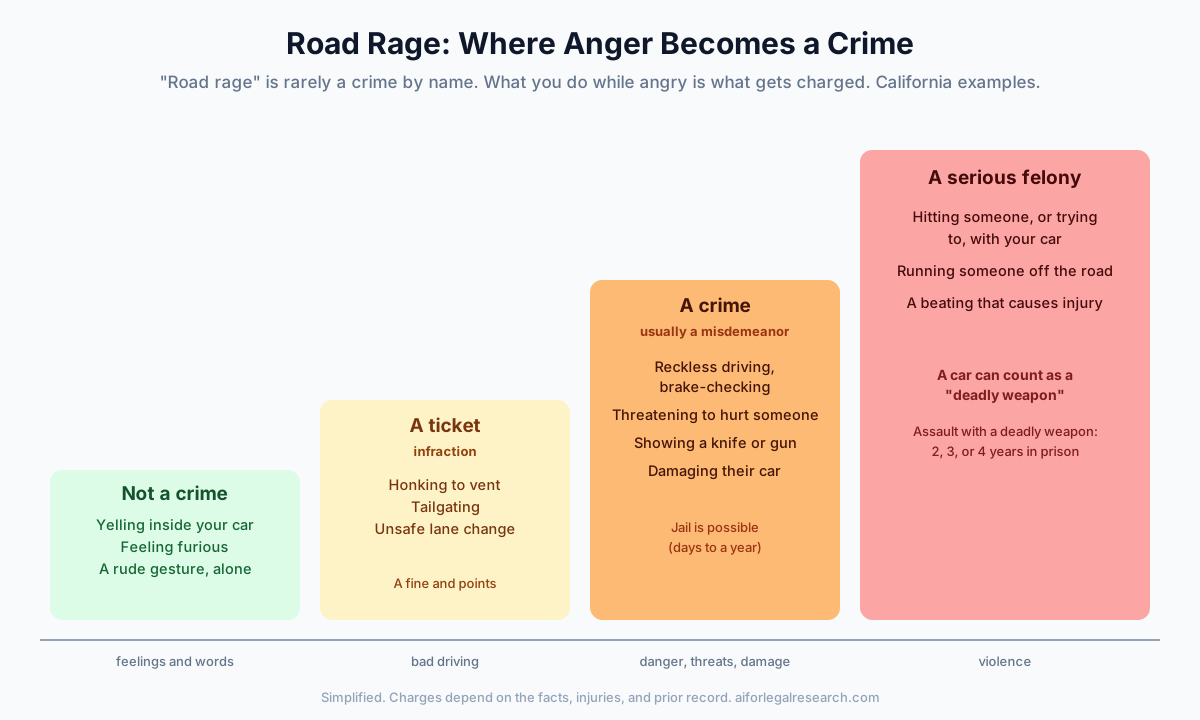
What Is Not a Crime
Anger is not illegal. Neither is yelling inside your own car or muttering about the other driver. A rude gesture, on its own, is generally treated by courts as protected expression, not a crime, even though it is a bad idea. Police cannot arrest you for being rude.
That protection ends quickly. The same gesture, combined with following someone, threatening them, or driving at them, becomes part of a crime.
What Gets You a Ticket
A lot of angry driving is simply bad driving, and it gets treated as a traffic violation: tailgating, unsafe lane changes, speeding to cut someone off.
Honking belongs here too. In California, the law says a driver should use the horn when reasonably necessary for safety, and that it "shall not otherwise be used" (Vehicle Code § 27001). A long blast to vent your anger is, technically, a violation. Few people get cited for it alone, but it can be added when police stop you for something else.
What Becomes a Crime
Here is where road rage turns into criminal charges. The table shows common behaviors and what they are typically charged as in California.
| What someone did | Possible charge | Possible penalty |
|---|---|---|
| Tailgated, weaved, or brake-checked to scare another driver | Reckless driving | 5 to 90 days in jail, a $145–$1,000 fine, or both |
| Threatened to hurt or kill the other driver | Criminal threats | Up to 1 year in jail, or state prison |
| Showed a knife, bat, or other weapon angrily | Brandishing a weapon | At least 30 days in jail |
| Showed a gun angrily | Brandishing a firearm | At least 3 months in jail |
| Kicked, keyed, or smashed the other car | Vandalism | Depends on the damage amount |
| Punched or pushed the other driver | Assault or battery | Misdemeanor or felony, depending on injury |
| Swerved at, hit, or ran someone off the road on purpose | Assault with a deadly weapon | 2, 3, or 4 years in state prison, or up to 1 year in jail, plus a fine of up to $10,000 |
The last row surprises people most. A car can count as a deadly weapon. If a driver uses it to hit someone, or to try to, courts can treat it exactly like a weapon. That turns a traffic dispute into a serious felony, even if no one is badly hurt.
California also has a rule aimed at road rage directly. When someone is convicted of assaulting another driver or passenger, the court may suspend their license for six months, or a year for a repeat offense, and may order them to complete an anger management or "road rage" course (Vehicle Code § 13210).
Is Brake-Checking Illegal?
It can be. Braking suddenly to "teach a tailgater a lesson" puts both drivers at risk of a crash, and that fits the definition of reckless driving: driving with willful or wanton disregard for the safety of people or property. If it causes a crash, it can also shift fault to you, even though you were the one hit from behind. Many people assume the rear driver is always at fault. A deliberate brake-check is the exception.
If You Are the One Being Targeted
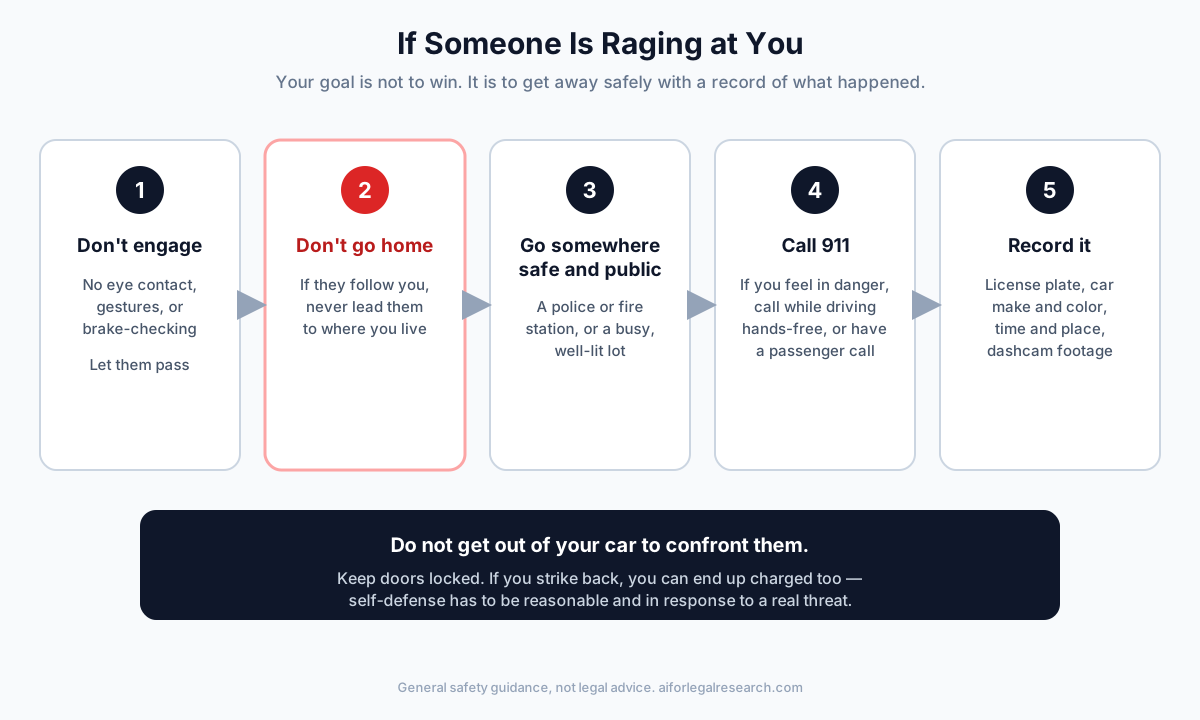
Two things matter beyond staying safe. First, do not retaliate. If you get out and swing back, or use your car to block or bump them, you can be charged too. Self-defense only applies when you face a real threat and respond reasonably. Second, preserve the evidence the same day: dashcam footage is often overwritten automatically, so save the clip before driving again.
Can You Press Charges for Road Rage?
You can report it, and you should if you were threatened, followed, or hurt, or your car was damaged. Technically, you do not "press charges" yourself. You report the incident, and the prosecutor decides whether to file charges. Your report, the other car's license plate, and any video make that far more likely.
Separately, you can sue for money in civil court if you were injured or your car was damaged. One catch: auto insurance generally covers accidents, not intentional acts, so the other driver's insurer may refuse to pay for damage they caused on purpose. Your own policy's uninsured motorist or collision coverage may help. Ask your insurer.
If You Have Been Accused or Charged
- →Don't explain yourself to the police at the scene or later without a lawyer. "He cut me off first" can end up as evidence that you were angry and acted on purpose.
- →Save your own footage and witness details. The other driver's behavior may matter, especially if you were defending yourself.
- →Don't contact the other driver. Apologies and explanations can be used against you.
- →Get a lawyer, or ask for a public defender. Whether a case is charged as reckless driving or as assault with a deadly weapon can change everything, and that is often negotiable.
Paste the text for a plain-English explanation of the charge and what it means. Legal information, not legal advice.
This article is general legal information using California law as the main example. It is not legal advice. Other states use different laws and penalties for the same conduct, and the outcome of any case depends on its facts. If you are in danger on the road, call 911.
Editorial note: AI For Legal Research publishes independent content. We do not accept payment for editorial coverage or review scores. Nothing on this site constitutes legal advice. Always consult a qualified attorney for legal matters.