Nobody looks this up at a good time. If you are reading this, someone you love has died, and you believe someone else caused it. You may be arranging a funeral, dealing with insurers, and wondering whether a lawsuit is even something you want.
This guide answers the questions families usually ask, in roughly the order they ask them. We are not a law firm, and we are not trying to sign you up. Some of what follows is exactly what law firm websites tend to skip: what the lawyer takes, why a claim can be worth far more than anyone can collect, and the deadline that ends many cases before they start.
What a Wrongful Death Lawsuit Is
A wrongful death lawsuit is a civil case. The family asks a court to make the person or company responsible for a death pay money for what the family lost. It is not a criminal case. No one goes to jail because of it.
Because it is civil, the family does not have to prove anything beyond a reasonable doubt. It only has to show that it is more likely than not that the defendant caused the death. That is why a family can win a wrongful death case even when a criminal case failed. O.J. Simpson was acquitted of murder in 1995, and then found liable in a wrongful death lawsuit in 1997.
Do We Have a Case?
In most states, the family needs to show three things:
- →The death was caused by someone else's wrongful act or carelessness. Careless is enough. The person does not have to have meant any harm.
- →That conduct actually caused the death. Not just something that happened nearby.
- →The family suffered real losses as a result. Financial and personal.
Common situations include car and truck crashes, medical mistakes, unsafe property, defective products, nursing home neglect, and violent acts. One important exception: if the death happened at work, the family usually cannot sue the employer, because workers' compensation covers it instead. The family may still be able to sue someone else, such as the maker of faulty equipment or another driver.
Who Is Allowed to Sue?
Not everyone who loved the person can file. Each state has a list.
In California, the closest family members can sue: a spouse or registered domestic partner, children, and grandchildren whose parent has died. If there are none, the people who would inherit under the law can sue instead. Some other relatives can sue only if they depended on the person financially, including stepchildren, parents, and a spouse whose marriage turns out to be invalid but who believed in good faith it was valid (Code of Civil Procedure § 377.60).
Many other states work differently. The lawsuit is filed by the personal representative of the person's estate, on behalf of the family members the law names. Either way, the family usually brings one case together rather than several separate ones.
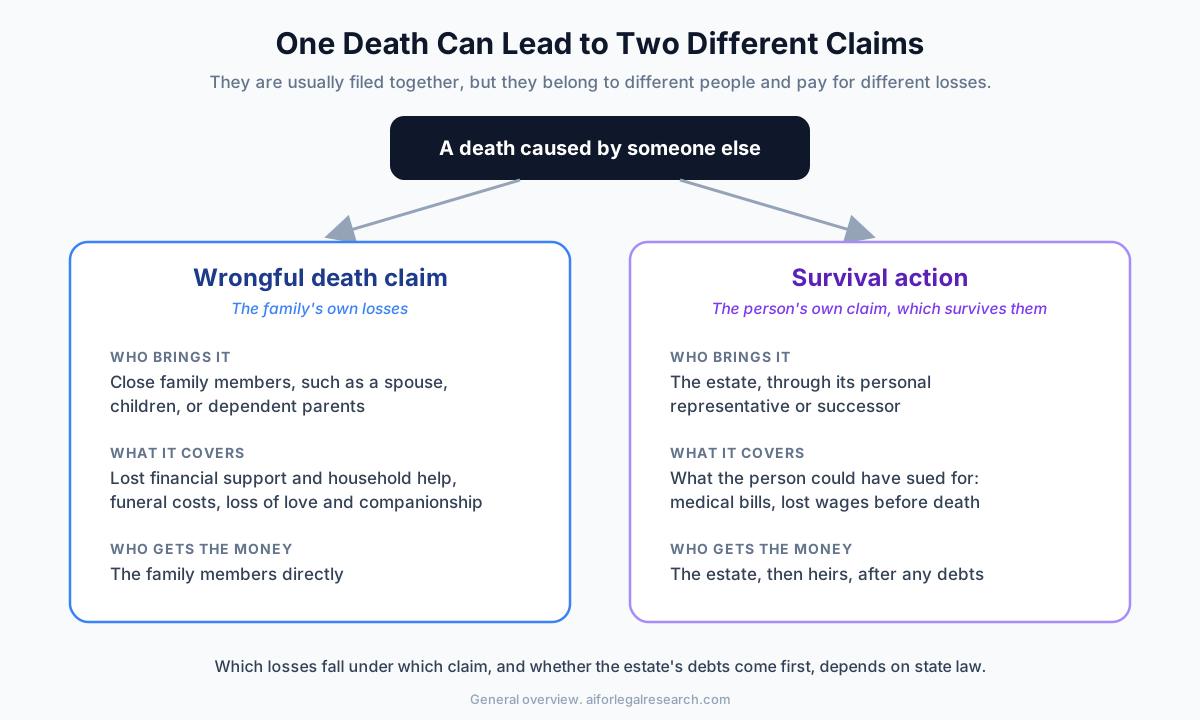
You may hear a lawyer mention a second claim, called a survival action. It is the lawsuit the person could have filed themselves if they had survived, for things like their own medical bills and lost wages before death. It belongs to the estate, not directly to the family. The two are usually filed together.
How Long Do We Have?
This is the question to answer first, because missing the deadline usually ends the case no matter how strong it is.
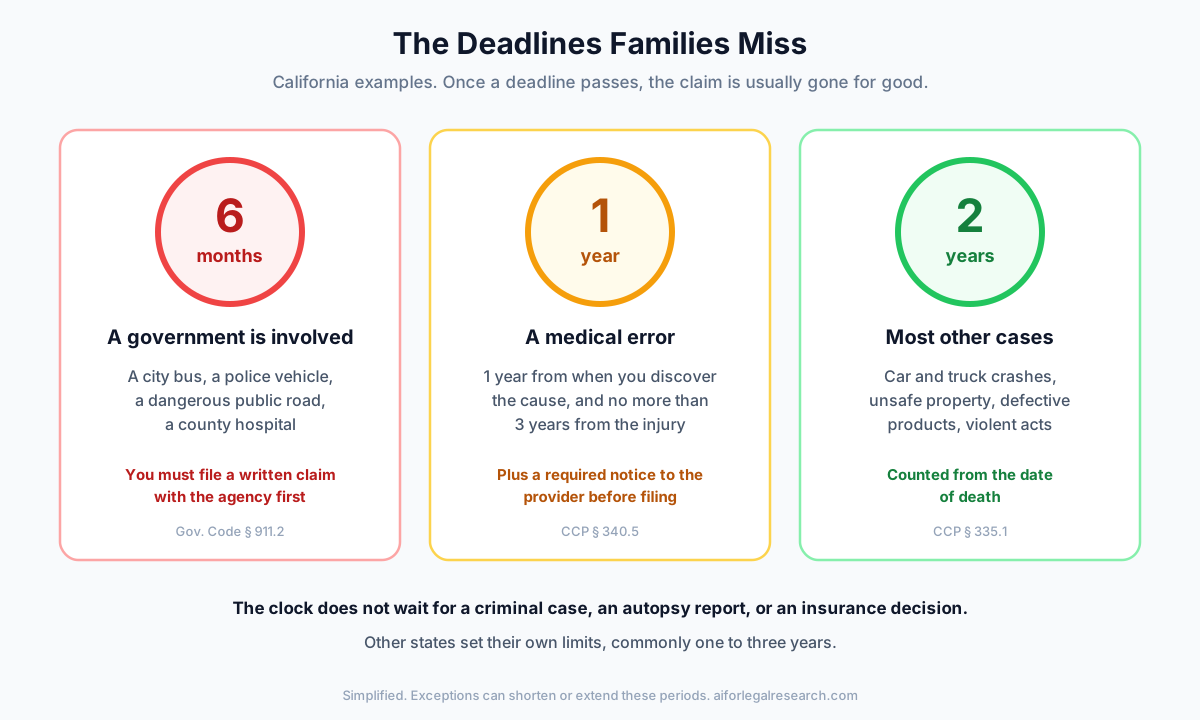
In California, most wrongful death lawsuits must be filed within two years of the death (Code of Civil Procedure § 335.1). Medical error cases have their own shorter rule.
The trap is government involvement. If a city bus, a police car, a public hospital, or a dangerous public road played any part, you generally must file a written claim with the agency within six months (Government Code § 911.2) before you can sue at all. Many families do not realize a government is involved until it is too late.
Other states set their own limits, most commonly one to three years. Two things hold almost everywhere: the clock does not stop while you wait for a criminal case or an autopsy report, and insurers have no duty to remind you it is running.
What Is a Claim Worth?
You will see websites quote an "average wrongful death settlement." Be careful with those numbers. Cases vary too much for an average to mean anything for your family. What you can understand is how a value is built.
The losses a family can usually claim fall into two groups:
- →Financial losses: the income and support the person would have provided, the value of household help they gave, such as childcare, repairs, or driving, and funeral and burial costs.
- →Personal losses: the loss of the person's love, companionship, comfort, care, guidance, and support.
Something that surprises many families: in California, the law does not pay for grief itself. The standard instructions given to California juries tell them not to award money for the family's grief or sorrow. What they compensate is the loss of the relationship, meaning what the person gave the family, not how much the family hurts. The line can feel cruel, but it explains why lawyers ask so many questions about daily life together.
Some cases also have limits set by law. In California, damages for personal losses in a death caused by medical negligence are capped. The cap started at $500,000 in 2023 and rises by $50,000 each year until it reaches $1 million (Civil Code § 3333.2).
Worth is not the same as collectible
This is the part families most often learn too late. A claim is only worth what the defendant can actually pay. For most people and small businesses, that means their insurance. If an at-fault driver has a $1 million policy and few assets, the case may settle for $1 million even if the family's losses were much larger.
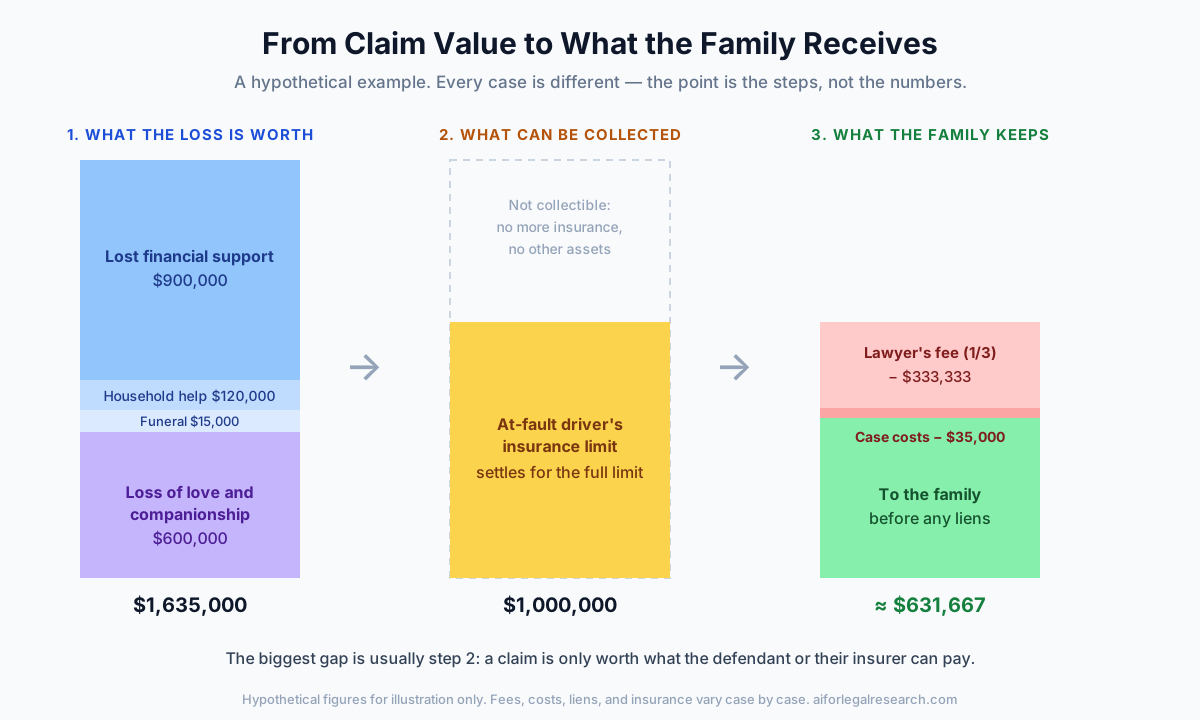
A good lawyer will look for every other source early: other defendants, an employer's policy, the family's own underinsured motorist coverage. That search is often where a lawyer earns the fee.
What Will It Cost Us?
Usually nothing up front. Most wrongful death lawyers work on a contingency fee: they are paid a percentage of what the family recovers, and nothing if there is no recovery. One-third is common, and the percentage often rises if the case goes to trial.
There are also case costs: expert witnesses, medical records, depositions, court fees. In serious cases these can reach tens of thousands of dollars. Ask two questions before you sign: who pays the costs if you lose, and is the lawyer's percentage calculated before or after costs are taken out? On a large settlement, the second answer can change what the family receives by thousands of dollars.
How Long Will It Take?
Most wrongful death cases settle without a trial. A clear case with a cooperative insurer might resolve in under a year. A disputed case against a hospital or large company commonly takes two to three years, and longer if it goes to trial.
The usual stages are: investigation and gathering records, filing the lawsuit, an exchange of evidence called discovery, depositions, mediation or settlement talks, and then trial if nothing settles.
What Will We Have to Go Through?
It helps to know this in advance. Family members may be asked to give a deposition: answering the other side's lawyer's questions under oath, usually in an office, with a court reporter. Expect questions about your relationship, your finances, and sometimes the person's health or habits. The defense is trying to lower the value of the loss. It can feel invasive, and a good lawyer will prepare you for it.
You also have the right to decide. The family can accept or reject a settlement offer, and a lawyer should explain each one clearly. Some families choose to settle sooner, for less, to be done with it. That is a legitimate choice.
Who Gets the Money, and Is It Taxed?
How money is split among family members depends on state law and, often, on a court's approval. Money for a minor child is usually protected in a supervised account or structured payments until the child is an adult.
Taxes are usually not a concern for the main award. Under federal law, damages received because of physical injury or physical sickness are not taxable income, and wrongful death damages generally fall in that category (26 U.S.C. § 104(a)(2)). Punitive damages are generally taxable, and interest earned on a judgment is too. For a large settlement, it is worth asking a tax professional how it is structured.
Before You Sign With a Lawyer
You do not have to hire the first lawyer who calls, and you should be wary of anyone who contacts you uninvited soon after a death. Meet two or three. Ask:
- →How many wrongful death cases like ours have you handled, and how many went to trial?
- →What is your fee percentage, and does it change if we go to trial?
- →Is the fee calculated before or after case costs? Who pays the costs if we lose?
- →Who will actually work on our case day to day?
- →What deadline applies to us, and is a government agency involved?
- →How and how often will you update us?
Get the fee agreement in writing, and read it before you sign.
Paste the text for a plain-English explanation of what it says. Legal information, not legal advice.
This article is general legal information, mostly using California as an example. It is not legal advice. Wrongful death laws, deadlines, and who may sue vary by state, and a missed deadline usually cannot be fixed. If you are considering a claim, speak with a lawyer soon — most offer a free first consultation.
Editorial note: AI For Legal Research publishes independent content. We do not accept payment for editorial coverage or review scores. Nothing on this site constitutes legal advice. Always consult a qualified attorney for legal matters.