A family member is charged with burglary, and the first question is always the same: "But he didn't take anything." Or your garage was broken into, and the police report says burglary while your insurer asks about theft. The words sound interchangeable. Legally, they are not.
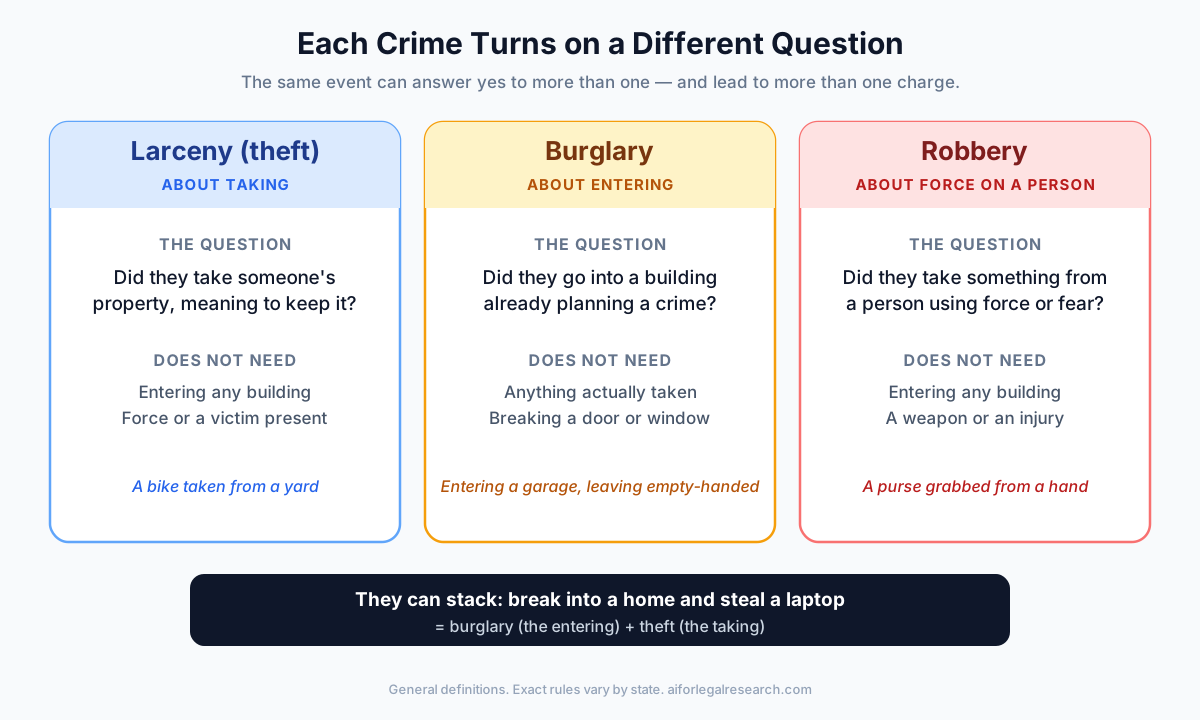
The difference comes down to one idea. Larceny is about taking. Burglary is about entering. Everything else follows from that.
Which Crime Is It? Six Quick Examples
Try these before reading the rules. The answers are based on California law, which works like most states on these points.
| What happened | Crime | Why |
|---|---|---|
| Someone takes a bike left on an open front lawn | Theft (larceny) | Something was taken. No building was entered. |
| Someone breaks into a garage, gets scared, and leaves with nothing | Burglary | They entered planning to steal. Taking something is not required. |
| Someone enters a house and steals a laptop | Burglary and theft | One act of entering, one act of taking. Both can be charged. |
| Someone grabs a purse from a woman's hand and runs | Robbery | Taking from a person by force. |
| Someone smashes a locked car window and takes a bag | Burglary | In California, a locked car counts like a building. |
| Someone walks into an open store and pockets $200 of goods | Shoplifting, not burglary | California has a special rule for this, explained below. |
Larceny: The Taking
Larceny is the old legal word for stealing: taking someone else's property without permission, intending to keep it or deprive them of it. Where it happened does not matter. A yard, a sidewalk, or a store all work.
Here is something that surprises people: California no longer uses the word "larceny" for charges. Under Penal Code § 490a, any law that says "larceny" is read as "theft." So a Californian is charged with petty theft or grand theft, not larceny. States such as New York, Massachusetts, Michigan, and North Carolina still use "larceny" in their laws. The idea is the same.
In California, the dividing line is $950. Taking property worth $950 or less is usually petty theft, a misdemeanor. Taking more is grand theft, which can be charged as a misdemeanor or a felony.
Burglary: The Entering
Burglary is entering a building, or certain other places, with the intent to commit theft or a felony inside (Penal Code § 459). It does not require breaking anything, and it does not require taking anything. Three details matter most:
- →The intent must exist at the moment of entry. If someone walked in for an innocent reason and only then decided to steal, that is theft, not burglary. This is often the center of the fight in court.
- →"Building" is broad. California's law lists houses, rooms, apartments, shops, warehouses, barns, and tents, and also includes a vehicle when its doors are locked.
- →Entry can be minimal. Reaching an arm or a tool through an open window can count as entering.
Where Robbery Fits In
People often mix up robbery and burglary, especially in everyday speech. ("My house got robbed.") Legally, robbery means taking something from a person, or from their immediate presence, using force or fear. A mugging is robbery. A break-in while you are away is burglary. If someone breaks in and threatens you while you are home, it can be both.
Why Burglary Is Usually Punished More Harshly
It can seem strange that entering a garage and taking nothing is treated more seriously than walking off with a bike. The reason is danger. Entering someone's space can lead to a confrontation, and homes are where people feel they should be safest. The law punishes the entering itself.
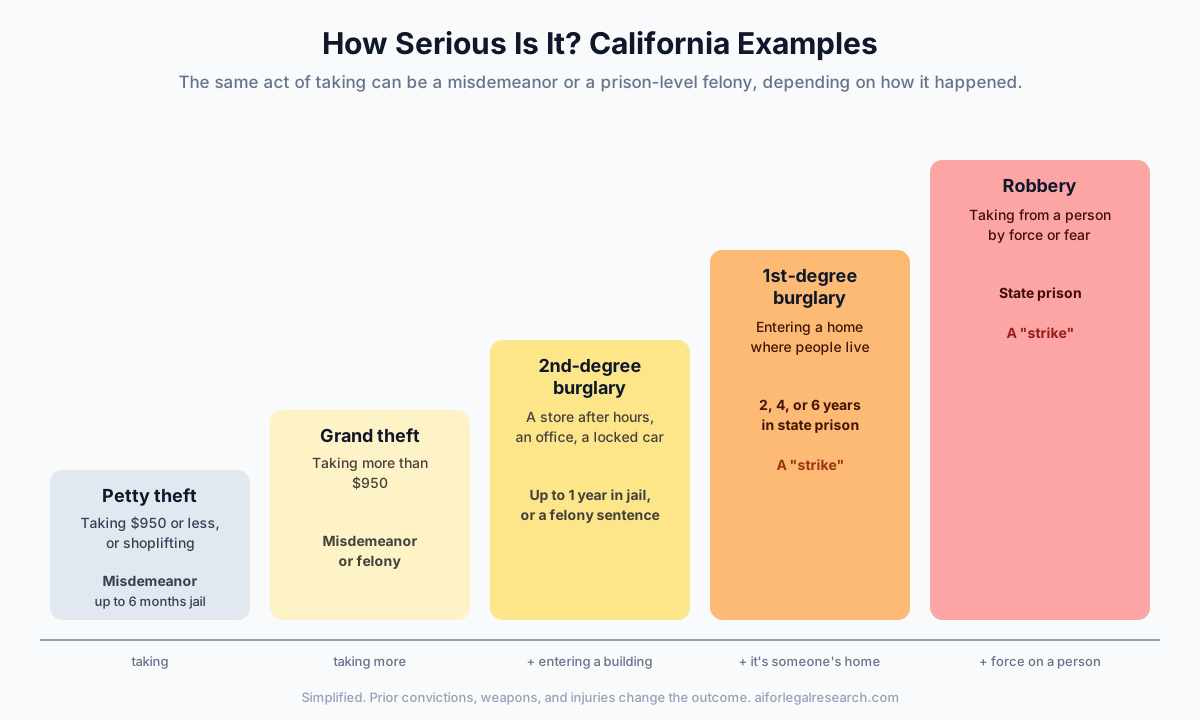
California splits burglary into two degrees:
- →First-degree burglary is burglary of a home or other place where people live. It is punished by two, four, or six years in state prison (Penal Code § 461). It is also a "serious felony" under California's Three Strikes law (Penal Code § 1192.7), which means it counts against a person in any future case.
- →Second-degree burglary covers everything else, such as a store after hours, an office, or a locked car. It can be charged as a misdemeanor, with up to a year in county jail, or as a felony.
Can Someone Be Charged With Both?
Yes. Burglary and theft are separate crimes, so breaking into a home and stealing a laptop is commonly charged as both. Prosecutors often add every charge the facts support, which is one reason charging documents look so alarming.
California has one important exception. Since Proposition 47, entering an open store during business hours to steal $950 or less is shoplifting, a misdemeanor (Penal Code § 459.5). The law says it must be charged as shoplifting, and the person cannot also be charged with burglary or theft of the same property. Before this rule, the same act could be charged as commercial burglary.
If a Family Member Has Been Charged
Burglary charges often sound worse than the facts, and sometimes the facts are worse than they sound. These questions help you understand where the case really stands:
- →Is it first or second degree? A home changes everything, including whether it is a strike.
- →What was the intent when they went in? If the prosecution cannot show a plan to steal at the moment of entry, a burglary charge may not hold, even if a theft charge does.
- →Was it a store during business hours? In California, that points to shoplifting instead.
- →Is it charged as a misdemeanor or a felony? Many theft and second-degree burglary charges can be either, and that can sometimes be negotiated.
- →Is there a prior record? Earlier convictions can raise the stakes sharply.
Your family member should not discuss the case with police or with you over a jail phone, which is recorded. They should ask for a lawyer, and for a public defender if they cannot afford one.
If You Were the Victim
- →Report it and get the report number. Insurers usually require it.
- →Photograph everything before you clean up, especially any damaged door, window, or lock.
- →List what is missing, with receipts, photos, or serial numbers if you have them.
- →Read your policy's theft section. Homeowners and renters policies usually cover theft, but some policies, especially business policies, only pay for "burglary" when there are visible signs of forced entry. That is where the difference between these two words can cost real money.
Paste the text for a plain-English explanation of what it says. Legal information, not legal advice.
This article is general legal information using California law as the main example. It is not legal advice. Definitions, degrees, and penalties differ between states, and the outcome of any case depends on its facts. If you or a family member is facing charges, speak with a criminal defense attorney or public defender.
Editorial note: AI For Legal Research publishes independent content. We do not accept payment for editorial coverage or review scores. Nothing on this site constitutes legal advice. Always consult a qualified attorney for legal matters.