The judge says "unsupervised probation," and it sounds like good news. No officer. No check-ins. No one showing up at your door.
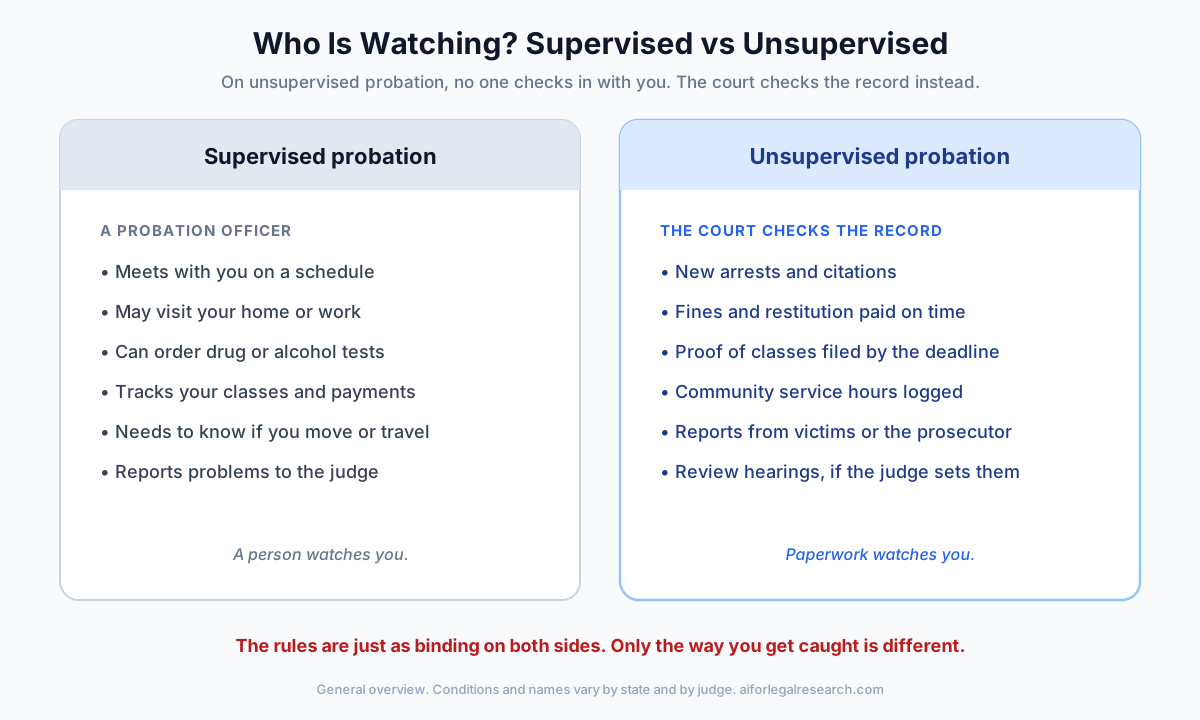
It is good news. But many people hear "unsupervised" and think it means "unenforced." It does not. The conditions are as binding as any other probation. The only difference is how the court finds out when you break one. That gap is where most people get into trouble.
What Unsupervised Probation Is
Unsupervised probation is a sentence where you stay out of jail and live normally, as long as you follow conditions set by the judge. There is no probation officer assigned to you. You answer to the court directly.
It is usually given for misdemeanors and first offenses. Courts use different names for it:
- →Informal probation
- →Summary probation
- →Court probation or bench probation
- →Non-reporting probation
- →A "conditional sentence," which is the official term in California
California's Penal Code shows the difference in one line. Regular probation is release "under the supervision of a probation officer." A conditional sentence is release "subject to conditions established by the court without the supervision of a probation officer" (Penal Code § 1203(a)). Same conditions. No officer.
What You Still Have to Do
Your conditions are listed in your sentencing paperwork, often called the minute order or probation order. Read it. Common conditions include:
- →Obey all laws. This is on almost every probation order.
- →Pay fines, fees, and any restitution to the victim, on schedule
- →Complete a class, such as DUI school, anger management, or theft awareness, by a deadline
- →Do a set number of community service hours
- →Stay away from a person or place named in a protective order
- →Not drink or use drugs, if the case involved them
- →Show the court proof that you finished each requirement
That last one catches people. Finishing a class is not enough. In many courts, you must also file proof that you finished it. If the court never gets the certificate, the record shows you did not comply.
How the Court Finds Out
With no officer, the court watches the paper trail. Problems usually surface in one of these ways:
- →A new arrest or citation. It shows up in the system, and the prosecutor can ask the court to act on your probation.
- →A missed payment. Court finance records show it.
- →A missed deadline. The date for filing your class or community service proof passes with nothing on file.
- →A review hearing. Some judges schedule a date to check your progress. Missing it is its own problem.
- →A report from someone else. A victim, a witness, or the other side of a protective order tells the court.
Three Ways People Violate It Without Realizing
1. They finish the class but never file the proof
Jordan completed a 12-week DUI program. He kept the certificate in a drawer. The deadline to file it passed. The court saw no proof and set a hearing. He was not in trouble for drinking. He was in trouble for paperwork. Always file your proof, get a stamped copy, and keep it.
2. They fall behind on payments and say nothing
Money gets tight, so people stop paying and hope no one notices. The court does notice. If you cannot pay, ask the court to change your payment plan before you miss payments. Judges are much more flexible with someone who asks than with someone who goes silent.
3. They get a small new ticket
"Obey all laws" means all of them. A minor new offense, even one that would normally be a small fine, can be treated as a probation violation. It gives the court a reason to look at your original case again.
What Happens If You Violate It
A violation does not automatically send you to jail. The usual process is:
- →The court or prosecutor starts a violation proceeding, and you are notified or, for a new arrest, held.
- →A judge holds a hearing. There is no jury, and the standard of proof is lower than at a criminal trial.
- →The judge decides what to do.
Outcomes range widely. For a first, minor violation, a judge may simply warn you, give you more time, or add a condition. For serious or repeated violations, the judge can extend probation, switch you to supervised probation, or revoke it. Revocation means the judge can impose jail time, up to the maximum allowed for the original offense.
If you know you are going to miss a deadline, tell the court first. Asking for more time is almost always better than explaining a violation afterward.
How Long Does It Last?
It depends on your state and your offense. In California, a 2021 law shortened probation for most cases. Misdemeanor probation is now generally capped at one year (Penal Code § 1203a), and felony probation at two years (Penal Code § 1203.1). Some offenses that set their own probation length, such as DUI, can run longer. Other states set different limits, often one to three years for misdemeanors.
Can I Travel, Drink, or Move?
- →Travel: usually yes, if your order does not restrict it and you do not miss a court date or deadline. Check your order for any travel limits before booking.
- →Move out of state: ask the court first. Moving can affect your ability to finish classes or appear at hearings, and some courts require permission.
- →Drink alcohol: yes, unless your order says no alcohol. Orders in DUI and alcohol-related cases often do.
- →Own a gun: it depends on the offense. Some convictions, including many domestic violence misdemeanors, bar you from having firearms. Ask your lawyer before you buy or keep one.
- →Be searched: only if your order includes a search condition. Read it. If it is there, it applies even without an officer.
Finishing Early and Clearing Your Record
If you have followed every condition, you can often ask the court to end probation early. In California, the judge may terminate probation when your good conduct and reform warrant it (Penal Code § 1203.3). A clean payment record and every proof of completion on file make that request much stronger.
After probation ends, many states let you ask the court to dismiss or seal the conviction. In California this is often called an expungement, under Penal Code § 1203.4. A violation during probation can make this harder, which is one more reason to finish cleanly.
A Simple Way to Stay Out of Trouble
- →Get a copy of your probation order and read every condition.
- →Put every deadline in your calendar the day you are sentenced.
- →File proof of each completed requirement, and keep stamped copies.
- →Pay on schedule, or ask for a new plan before you fall behind.
- →If anything changes, tell the court before it becomes a violation.
Paste the text of your sentencing or probation order for a plain-English list of your conditions and deadlines. Legal information, not legal advice.
This article is general legal information, not legal advice. Probation rules, names, and limits vary by state, county, and judge. Your probation order controls. If you are unsure about a condition or facing a violation, speak with your defense attorney or a public defender.
Editorial note: AI For Legal Research publishes independent content. We do not accept payment for editorial coverage or review scores. Nothing on this site constitutes legal advice. Always consult a qualified attorney for legal matters.